ENGLISH OVERVIEW
Power of City
driven by Power of Nature
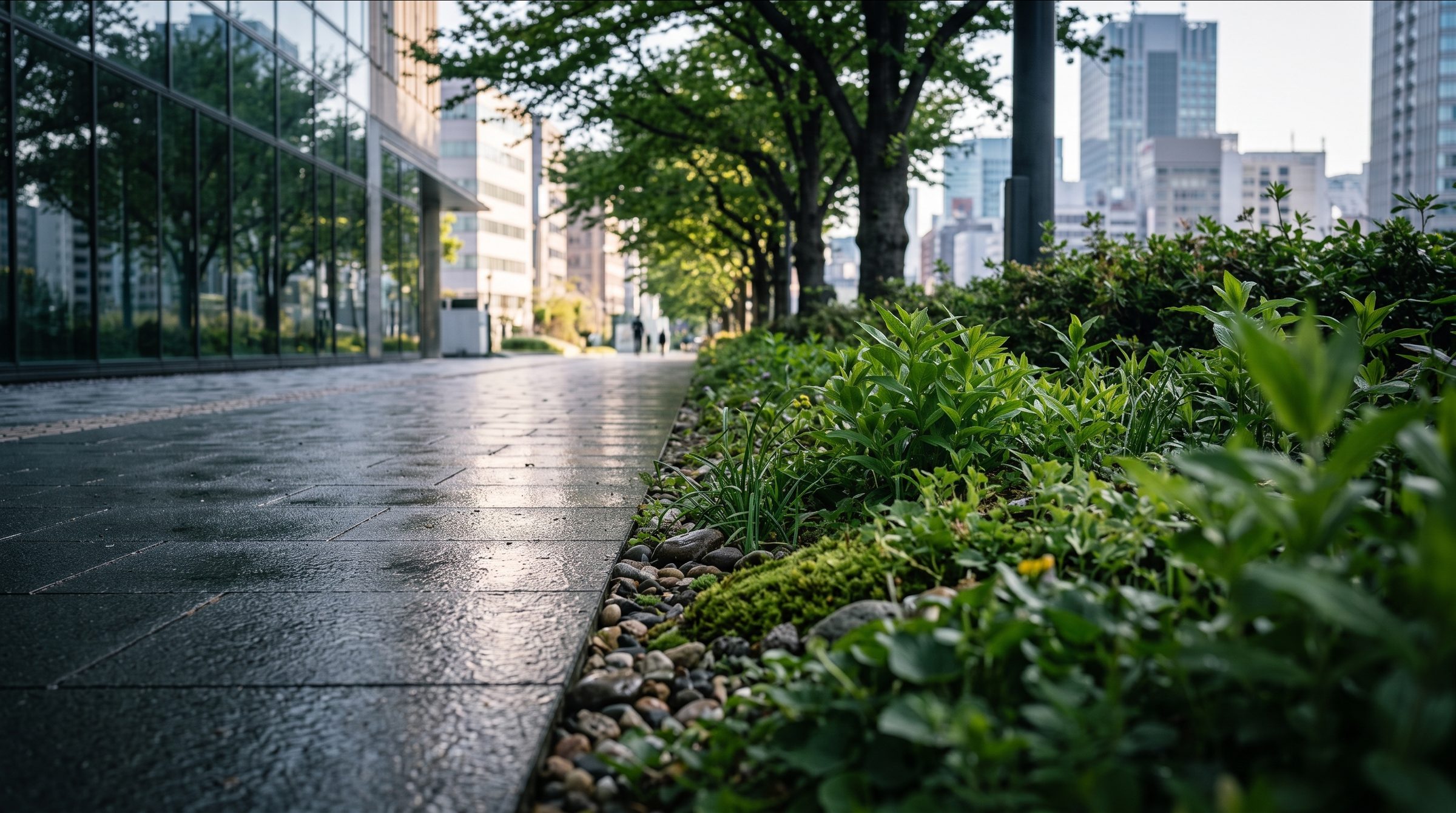
Green Infrastructure Research Institute is a general incorporated association based in Tokyo and Osaka, established in March 2018. We study, develop and promote green infrastructure for Japanese cities — planting bases that store and infiltrate rainwater, cool streets through evapotranspiration, and help trees grow healthily under pavements.
01ABOUT US
Who we are
Our research began in November 2008 with a study tour of green infrastructure in New York City and the surrounding states, and has continued mainly in the United States since then. In April 2014 we set out the direction of our research under the vision “Power of City driven by Power of Nature”. The Green Infrastructure Research Institute was set up in November 2014 and became a general incorporated association in March 2018.
The Institute is backed by the TOHO-LEO group. TOHO-LEO's greening business division was founded in 1974 by Yukio Kida, now the Institute's Representative Director, and has focused on research into soil and greening technologies and the development of greening materials.
| Name | Green Infrastructure Research InstituteGeneral incorporated association |
|---|---|
| Established | 30 March 2018Research since 2008 |
| Representative Director | Yukio KidaPh.D. (Science), Professional Engineer (City and Regional Planning), Registered Tree Doctor |
| Tokyo Office | 1-15-5 Kita-Otsuka, Toshima-ku, Tokyo 170-0004, Japan |
| Osaka Office | 1-1-28 Uemachi, Chuo-ku, Osaka, Japan |
| Mission | To support sustainable and resilient city-making through the concept of green infrastructure |
| Parent companies | TOHO-LEO Holdings Co., Ltd. / TOHO-LEO Co., Ltd. |
02OUR THINKING
NbS × Artscape: nature as infrastructure, landscape as culture
Rainwater retention and infiltration, reduction of surface runoff, removal of pollutants, improvement of water cycle including rainwater reuse and groundwater recharge, and improvement of microclimate in cities can be achieved by taking advantage of natural functions possessed by plants and soils, which results in new urban developments that are safe and comfortable to live in.
-
NATURE-BASED SOLUTIONS
Many benefits, not a single purpose
As opposed to the single-purpose gray infrastructure that can work only during rain events, like conventional civil engineering methods, green infrastructure can provide many benefits, which is its most important point.
-
MEASURABLE BENEFITS
Effects verified by measurement
At the Grand Mall Park in Yokohama, the microclimate effect has been verified and a technical report was published in the Journal of the Japanese Society of Revegetation Technology (volume 42, issue 3, February 2017). A heavy rain (110 mm/day) was observed on July 15, 2016, but the groundwater level at the rainwater retention and infiltration base only increased by 30 cm.
-
ARTSCAPE
Places people want to gather
Parks originally possess various natural elements such as soils, trees and water as basic natural components. If these elements can be utilized effectively and parks can be transformed into attractive spaces where many people can gather and enjoy themselves, then that is an ideal park development which is sustainable and provides values continuously into the future.
03FEATURED WORK
Technology and projects
-
TECHNOLOGY
Rainwater retention and infiltration base (J-Mix)
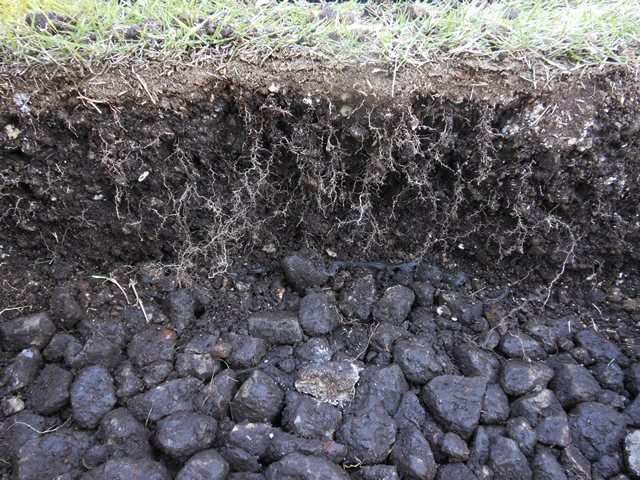
J-Mix is a novel rainwater retention and infiltration base which enables Japanese-style green infrastructure. It is made of recycled concrete wastes with a uniform particle size, coated with humus. Its void content ratio is 41%, so it can retain rainwater in the voids sufficiently.
Read more (Japanese) -
PROJECTYOKOHAMA
Grand Mall Park, City of Yokohama
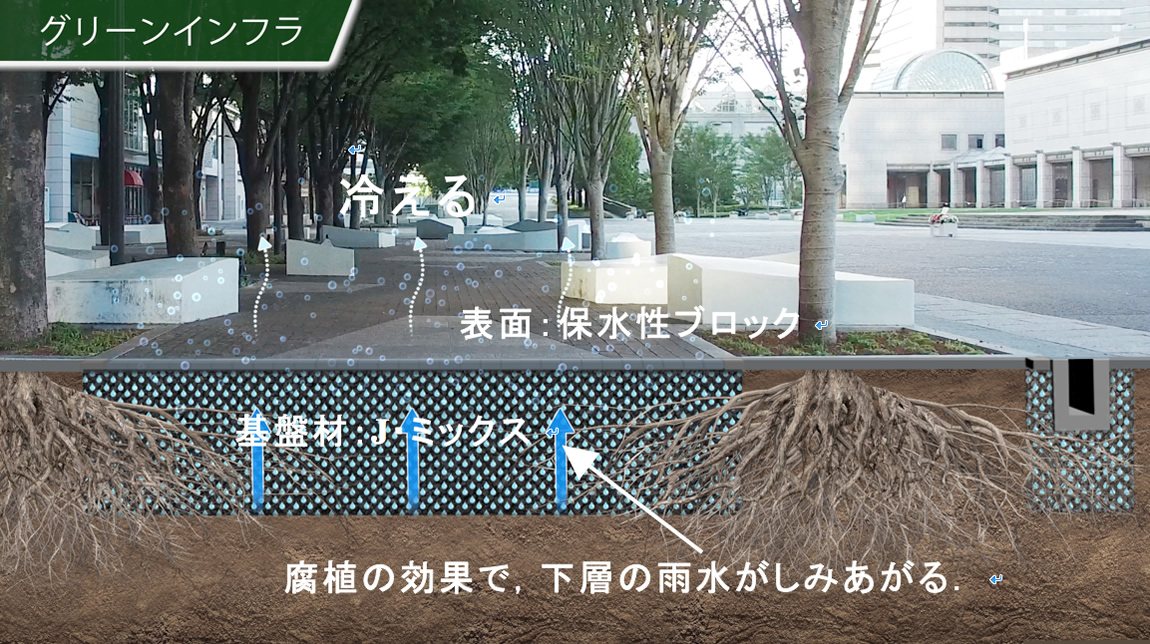
The Grand Mall Park was renovated as a core of new urban development in Minato Mirai 21. A large water circulation system was installed using green infrastructure technology, creating a “cool space even in summer” with green shade, evaporation of rainwater drawn up from underground by capillary action, and evapotranspiration from growing trees.
Read more (Japanese) -
PROJECTTOKYO
Shinjuku 3-chome Terrace
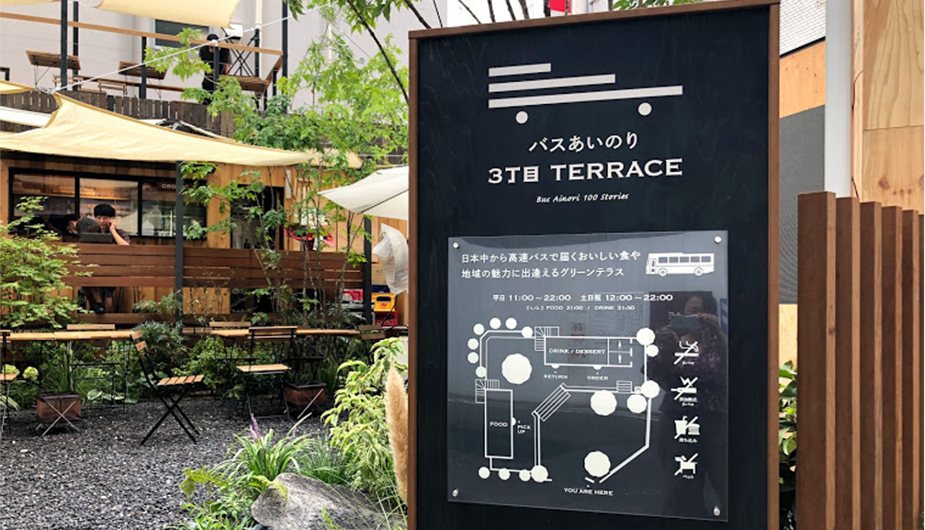
An open space created in September 2020 on a back-alley lot in Shinjuku 3-chome. Green coverage is 30%, the entire site is a rainwater infiltration base, and no rainwater runs off even at a rainfall intensity of 100 mm/hour. It received an Excellence Award in the urban space category of the 1st Green Infrastructure Awards.
Read more (Japanese)
04RESEARCH & PUBLICATIONS
Reports and publications
-
RESEARCH REPORT
Green infrastructure in New York City
Green Infrastructure Research Institute visited New York City in July 2016 and interviewed a representative of the city’s green infrastructure division. There are more than 2,300 rain gardens (rainwater retention and infiltration facility) built in New York City, particularly in the Brooklyn borough.
Read reports (Japanese) -
BROCHUREPDF, 2.5 MB
To the Era of Green Infrastructure
Our English brochure (July 2017) in five chapters:
- Green infrastructure: Why now?
- Urban development enhanced by green infrastructure
- Promotion of living environment by green infrastructure
- Activities of green infrastructure in major cities of the United States
- Development of green infrastructure in Japan
-
CONTACT
English inquiries welcome
Research collaboration, site visits, lectures and media requests. Please write in English or Japanese via the contact form.
Contact us
This page is an English overview. Detailed articles, case studies and news are currently published in Japanese. 日本語サイトへ
